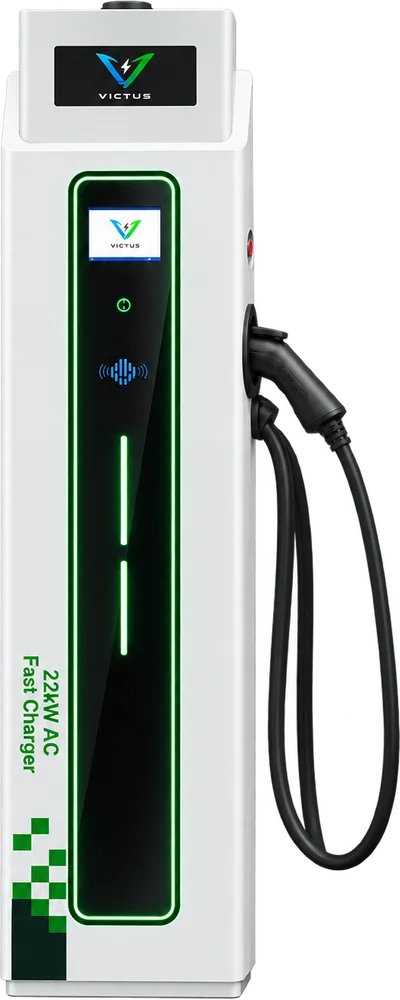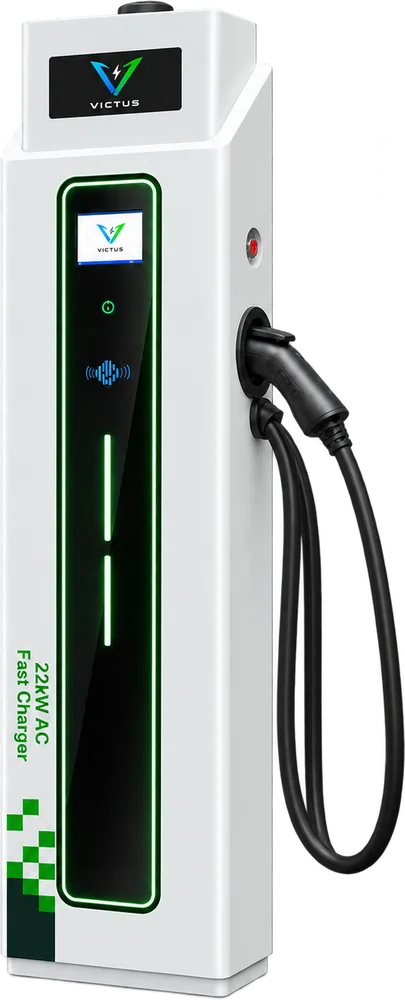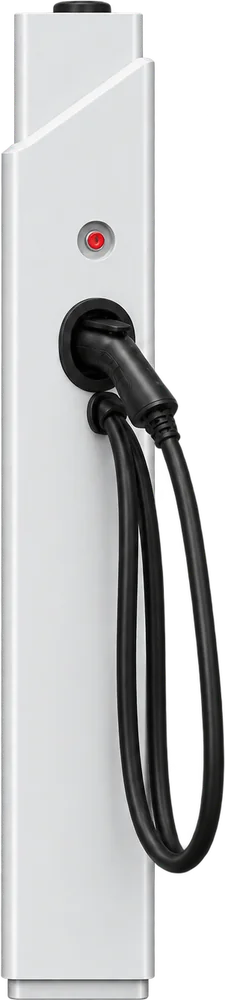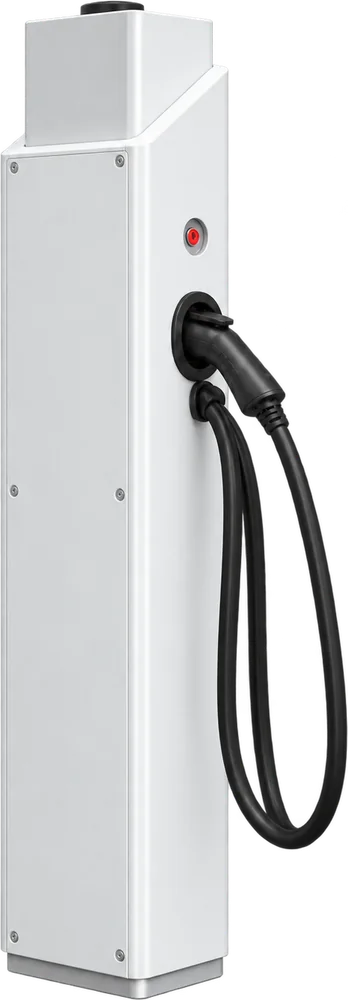
Why this unit
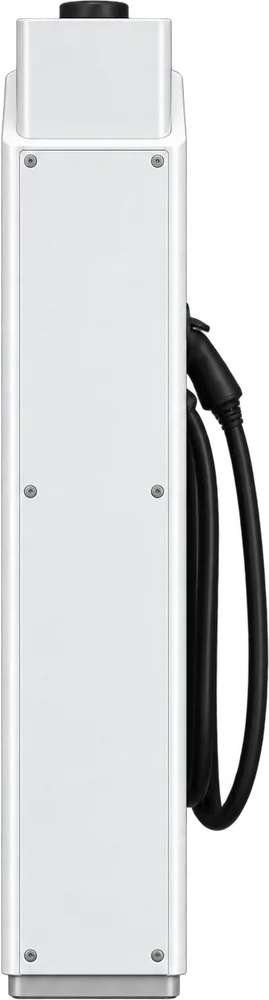
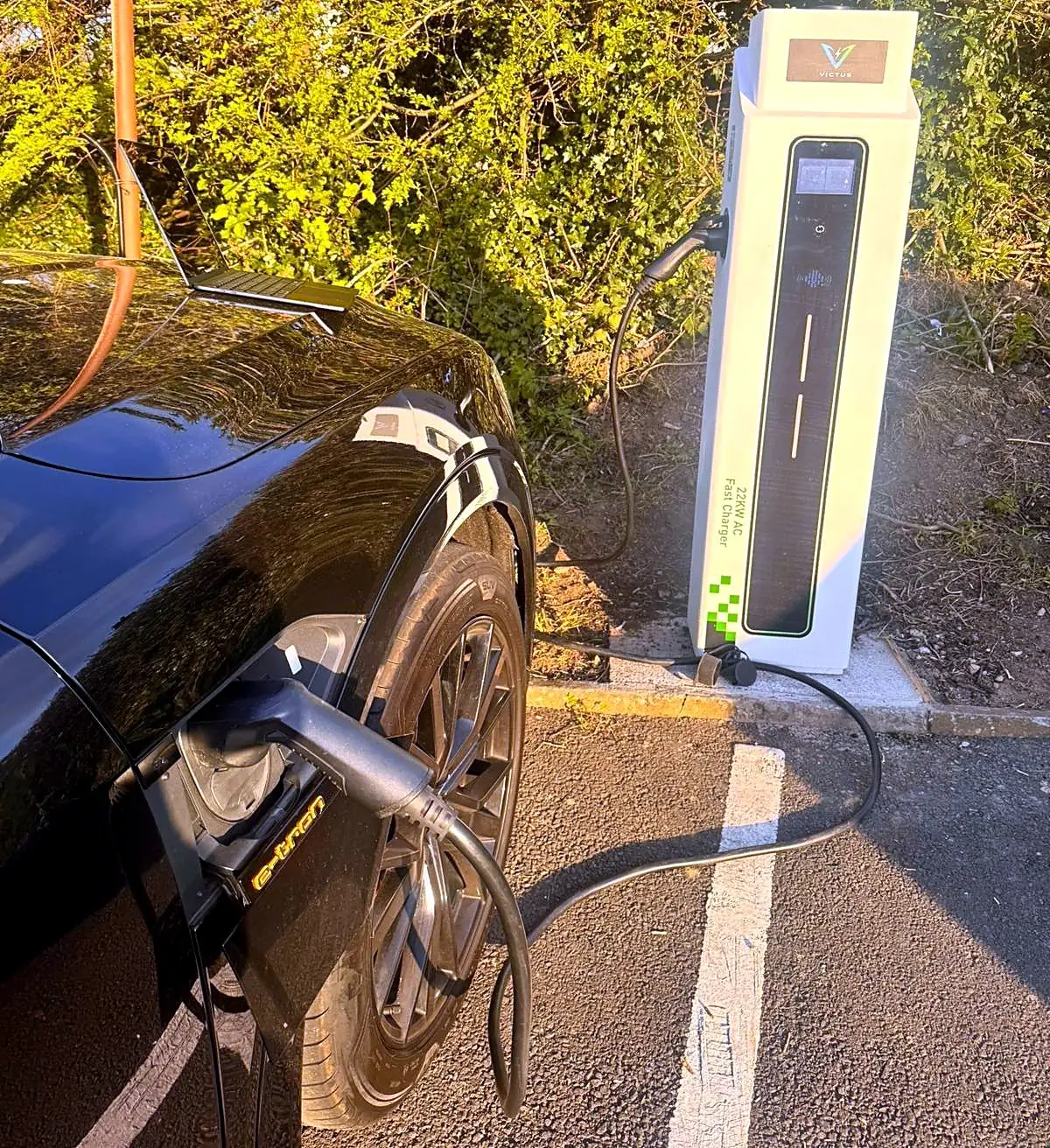
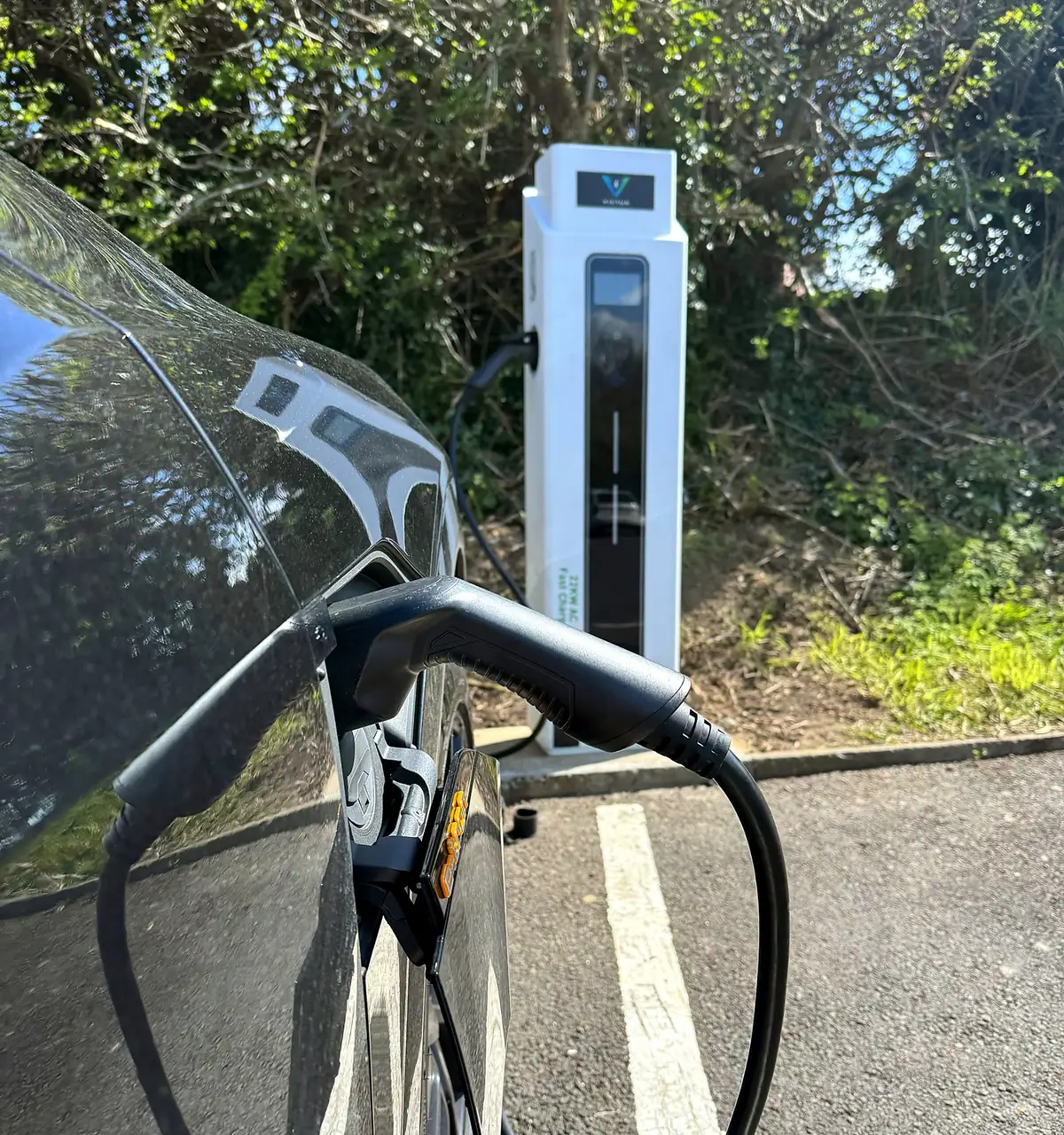
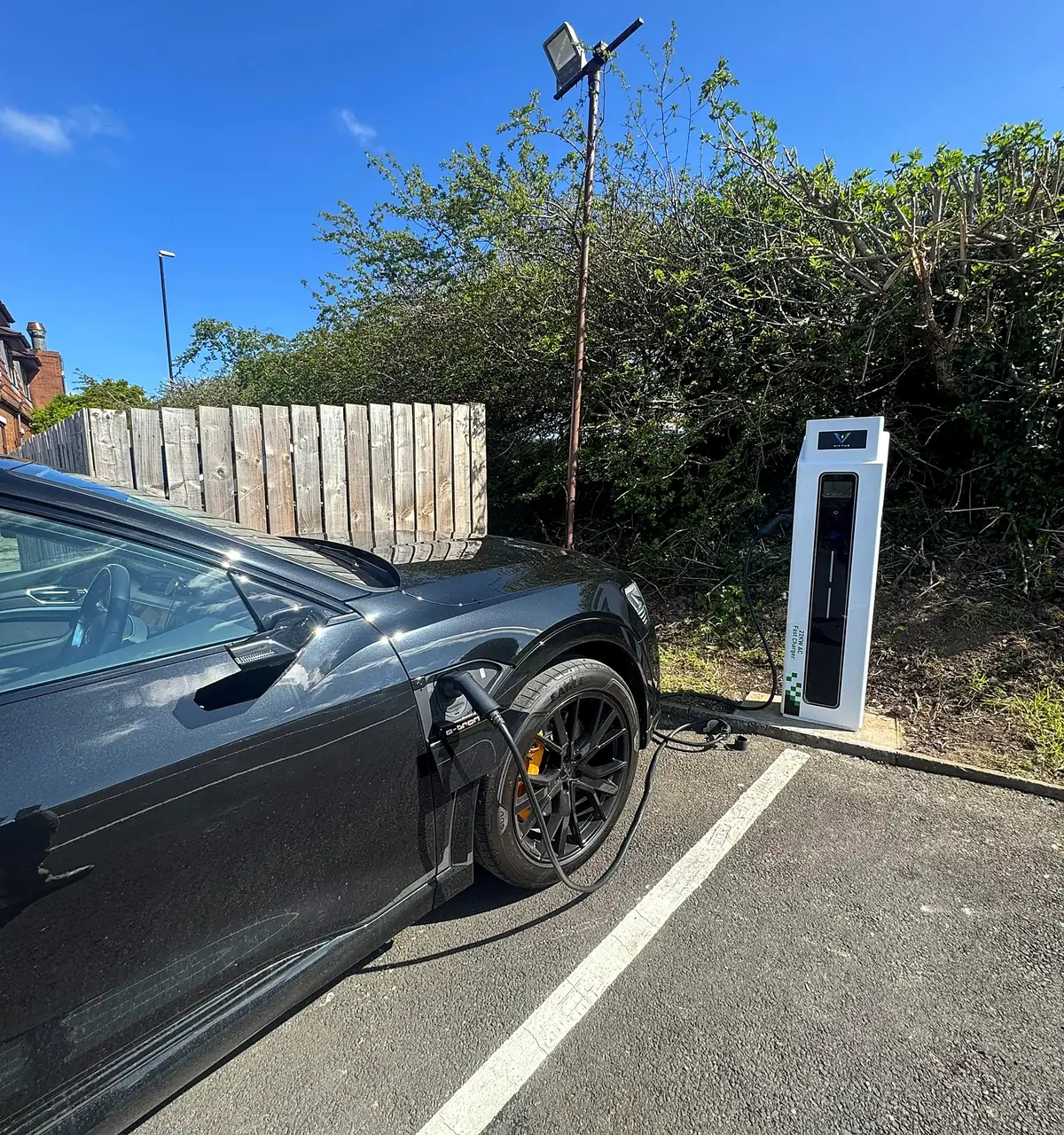
Destination sites need a charger that copes with an open car park through a North East winter, serves two cars at once and does not need anyone on reception to look after it. A floor-standing pedestal does that better than a wall box: it sits at the head of two bays, it is easy for drivers to spot, and it does not depend on a building being next to the bays.
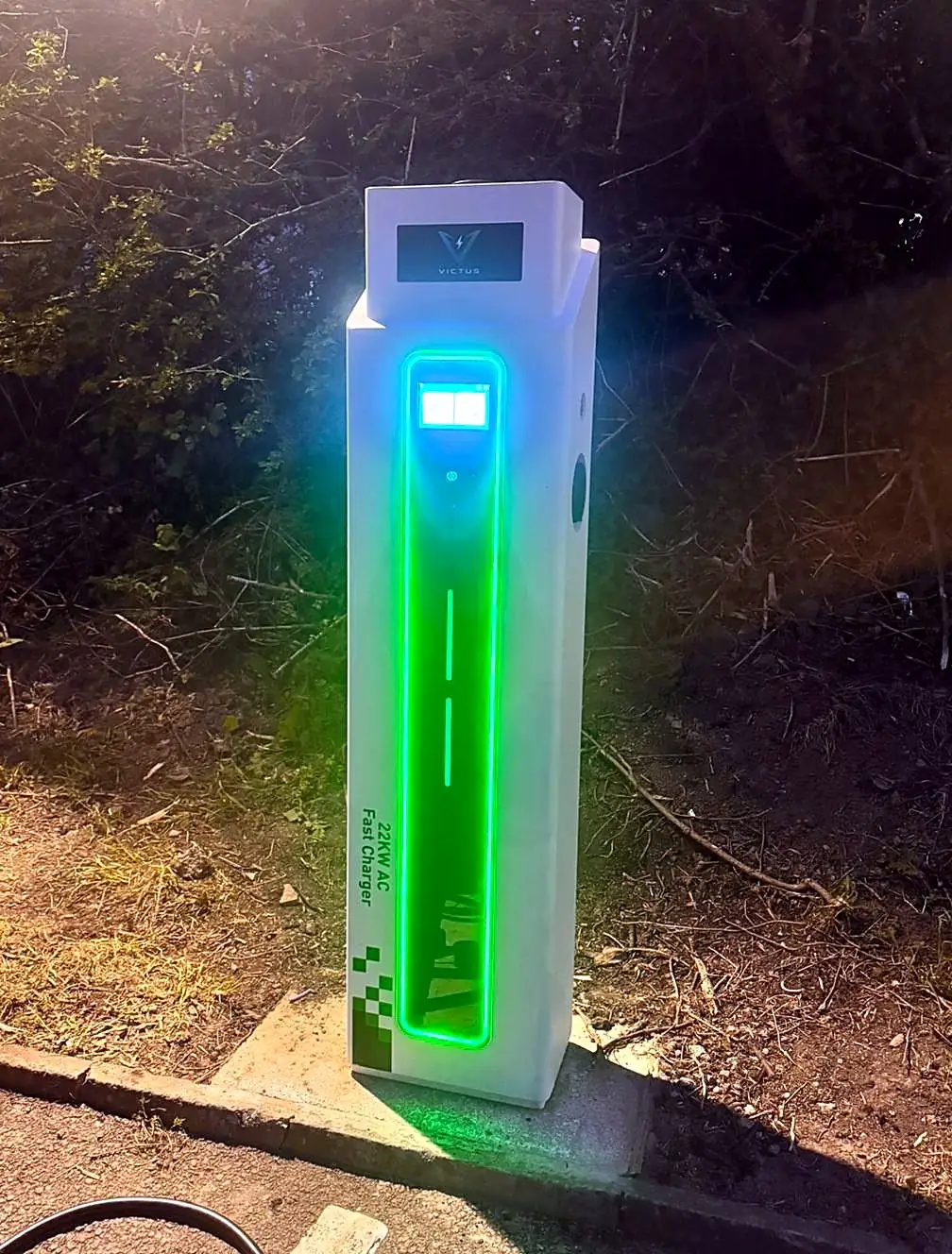
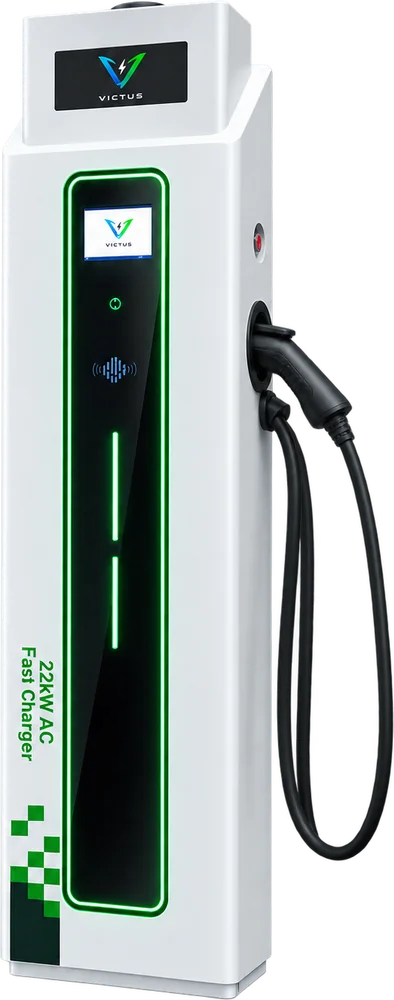
The Victus 22kW dual unit gives each bay its own Type 2 output, a screen, RFID and app start, built-in energy metering and an OCPP connection to our back office, so we see every session and every fault.
Specification
| Format | Floor-standing pedestal, about 1.4m tall |
|---|---|
| Outputs | 2 × Type 2 |
| Power | Up to 22kW per output |
| Supply | Three-phase |
| Starting a session | App or RFID card |
| Card payment | Contactless terminal available for public sites |
| Display | LCD screen and status light strip |
| Back office | OCPP 1.6J, connected to the Victus platform |
| Metering | Built-in energy meter |
| Load management | Dynamic load balancing available |
| Protection | Type A RCD with 6mA DC leakage detection |
| Operating temperature | -30°C to +55°C |
Typical specification. We confirm the exact configuration for your site at survey.
What speed will cars actually get?
The charger can deliver up to 22kW per output, but the car's on-board charger sets the speed.
| Car accepts | Range added per hour | Overnight |
|---|---|---|
| 7.4kW (single-phase limit) | about 25 miles | a full charge for most cars |
| 11kW (most current EVs on three-phase, e.g. Kia EV6) | about 37 miles | a full charge |
| 22kW (e.g. Renault Zoe ZE50, some Taycan, e-tron GT, EQS/EQE) | about 75 miles | a full charge |
Range per hour derived at about 3.4 miles per kWh, from the Local Government Association and Zapmap. Real figures vary with the car, the weather and the battery.
Cars that can take 22kW charge three times faster than at 7.4kW, and two outputs mean two cars at once. Our 7kW vs 22kW guide goes through it in detail.
Payments and access
Drivers start a session with the app or an RFID card, and you decide who can use it: guests, staff, the public or a mix. For chargers open to the public, the Public Charge Point Regulations 2023 require new chargers of 8kW and above to take contactless payment and to show the price in pence per kWh. See the regulations guide.
Monitored and maintained
Every charger reports to our back office. We see sessions, energy and faults, restart units remotely, and send an engineer when one is needed. Driver questions come to us, not your reception desk. Read what to expect from a commercial charger.
Other chargers we install
The dual 22kW pedestal suits most hotels, venues and car parks, which is why it is our most popular unit. It is not the only one. Where a site needs something different we specify single-socket AC posts, or rapid DC units for short stops and fleets that turn round quickly. The mix is chosen at survey against your supply, your dwell time and your budget.
Supply and load management
Two outputs at 22kW each draw roughly 32A per phase each at full power, about 64A per phase together. Dynamic load balancing shares what your supply can give, so the charger never takes more than is available. See the load management and grid capacity guides.